
Into the Wild Megaways Slot Demo – Honest Review, RTP & Volatility

Game Overview and Basic Information
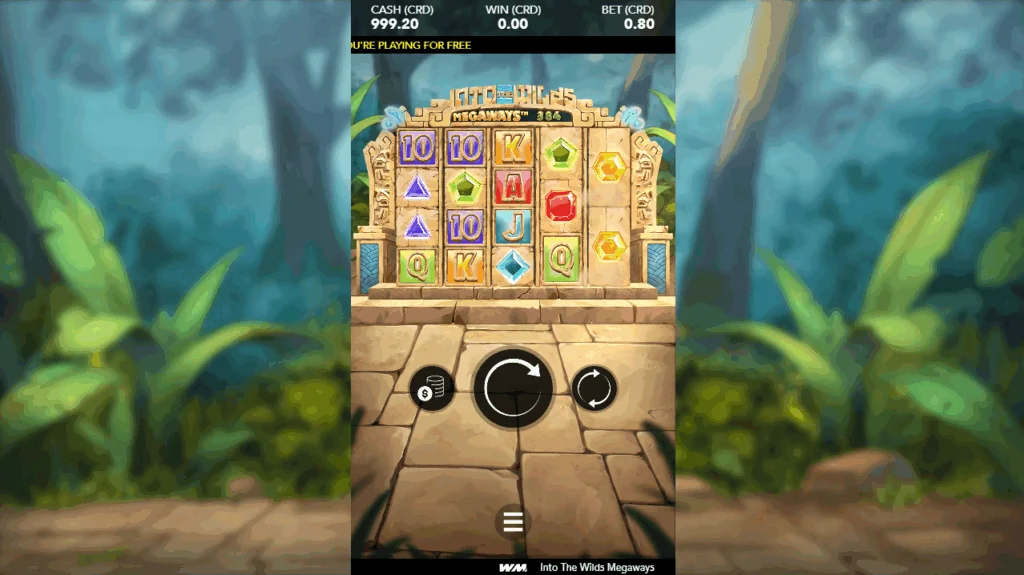
Developed by Blueprint Gaming, Into the Wild Megaways sits within a catalog that has consistently pushed the Megaways engine toward higher volatility territory. Released in 2021, the slot runs on the licensed BTG (Big Time Gaming) Megaways mechanic, generating up to 117,649 ways to win across six reels. That number is not decorative – it shifts dynamically with every spin, meaning the active win-ways count changes in real time based on how many symbols land on each reel.
The RTP is set at 96.09%, right in line with the current industry benchmark of around 96% and competitive within the medium-to-high volatility Megaways segment. Volatility is rated medium-high, balancing a reasonable base-game hit rate with amplified payout potential during the free spins phase. The base game is deliberately modest – the math model routes most of its return through the free spins engine rather than the standard spin cycle.
Bet range runs from £0.10 to £10.00 per spin, making the game accessible at lower bankrolls but limiting the ceiling for high-stakes players. The maximum win potential reaches 25,000x the stake – a theoretical figure tied to cascading multipliers during the free spins round rather than a single reel outcome.
The Megaways license here is not cosmetic. Blueprint has integrated the reaction mechanic (also called cascading wins) directly into the win calculation cycle, which means every winning combination removes itself from the reels and allows new symbols to fall into place – extending win sequences without an additional spin cost.
Easy, Fast, Comfortable
Loading the Into the Wild Megaways demo or real-money version takes under three seconds on a standard broadband connection. The interface opens with the reels centered and all controls distributed cleanly along the bottom panel – spin button, bet adjustment, autoplay, and a collapsible menu for settings and pay table access. Nothing requires navigation through multiple submenus.
Autoplay supports between 10 and 100 spins with optional stop conditions: loss limits, single win thresholds, and free spins triggers. These aren’t buried – they appear in the second step of the autoplay setup, which keeps the configuration readable without overcomplicating the flow.
The quick spin toggle cuts animation time noticeably, which matters when playing through higher spin counts. For demo players exploring how the Megaways counter behaves across sessions, this feature compresses testing time without removing visibility of the win mechanics.
One practical accessibility point: the game supports both portrait and landscape orientations without content reformatting. The reel grid rescales cleanly, and the bet panel repositions rather than overlapping critical elements – a small but meaningful distinction for touchscreen users.
Game Design
Theme and Graphics
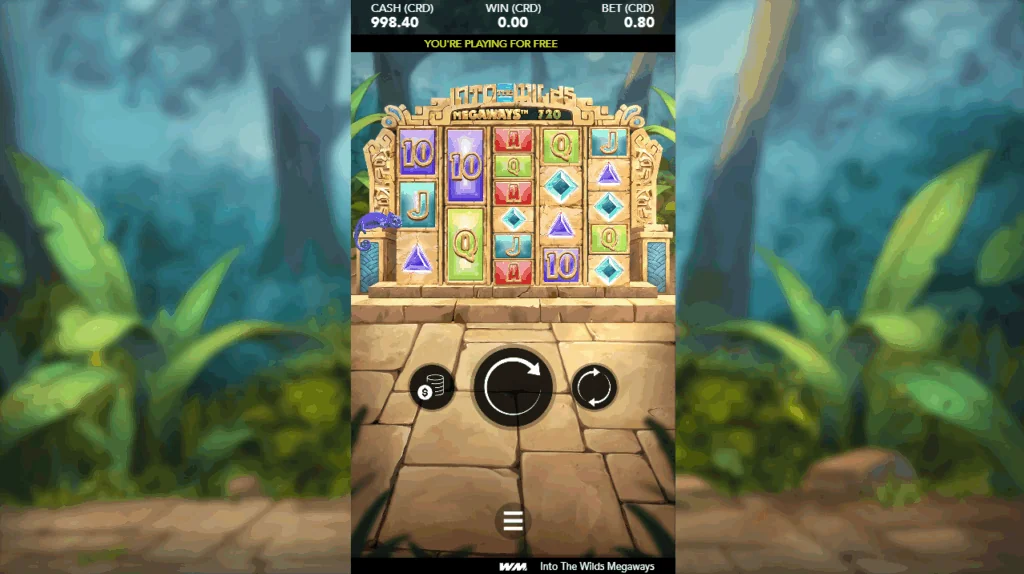
The visual concept draws from the North American wilderness – mountain ranges, dense forest backdrops, and a color palette that leans heavily on deep greens, slate blues, and amber tones. Blueprint has avoided the oversaturated brightness common to competing wildlife slots, instead opting for a muted, naturalistic aesthetic that reads as intentionally restrained.
Symbol artwork is rendered in a semi-realistic illustrative style. Animal symbols carry distinct silhouette profiles – the bear, eagle, wolf, and bison are immediately distinguishable at a glance, which matters on a six-reel grid where visual clarity affects how quickly wins register to the eye. Lower-value card rank symbols are styled with a wooden texture that fits the theme without dominating the reel space.
The background animation cycles through subtle atmospheric shifts – light moving across the mountain range, a slow cloud drift – giving the game a sense of environmental depth without pulling focus from the reels themselves. It is the kind of motion that registers peripherally rather than demanding attention.
Sounds and Gameplay Experience
The ambient audio layer uses a low-tempo, acoustic-guitar-driven score that establishes the wilderness tone without becoming repetitive across extended sessions. This is a specific design decision – many slots use looping orchestral builds that fatigue over time. The Into the Wild Megaways soundtrack sits at a lower intensity baseline, which means the audio escalation during the free spins round creates a genuine contrast rather than competing with an already-elevated base.
Win sounds are graduated – smaller cluster wins produce a brief chime sequence, while larger multi-cascade sequences trigger a heavier audio response. The reaction mechanic is accompanied by a distinct audio cue that signals each successive drop, helping players track win chains without needing to watch the counter exclusively.
The overall sensory pacing matches the volatility profile. Long stretches between significant wins do not feel punishing from an audio-visual standpoint because the design does not overpromise on every spin.
Bonuses and Symbols
Symbols in the Game
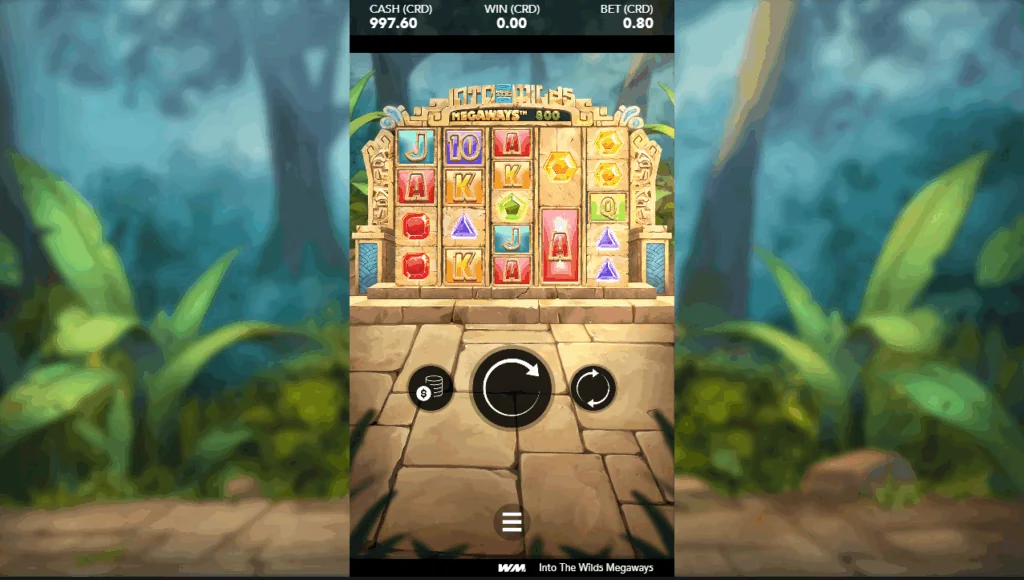
The symbol hierarchy is direct. The bear functions as the highest-paying regular symbol, paying 50x the stake for six of a kind. Below it, the eagle, wolf, and bison form the mid-tier group, each paying between 5x and 25x for six-of-a-kind combinations. The lower tier consists of A, K, Q, J, and 10 card ranks, paying between 0.5x and 2x for six-of-a-kind – their primary role is completing cascades rather than generating meaningful standalone returns.
The Wild symbol substitutes for all paying symbols and appears on reels two through six. It does not pay independently, functioning solely as a substitution mechanism. During the free spins phase, wilds interact with the multiplier trail system rather than operating passively.
The Scatter symbol triggers the free spins round and appears on all six reels. Three scatters activate the bonus; four, five, or six scatters award additional spins on top of the base trigger allocation.
Bonus Rounds and Free Spins
The free spins round is the core of the Into the Wild Megaways game’s math model. Three scatters award 12 free spins; four award 15; five award 18; six scatters – the rarest trigger condition – award 25 free spins.
What separates the bonus structure from standard Megaways implementations is the multiplier trail mechanic. A progress bar tracks consecutive wins during the free spins phase. Each win advances the trail, incrementing the active multiplier. The multiplier does not reset on non-winning spins – it holds its current position, which creates a compounding dynamic across the full bonus session rather than requiring win chains to maintain progress.
The multiplier can reach 15x at maximum trail advancement. Combined with cascading reactions – which can produce multiple wins per free spin – the interaction between the trail multiplier and the cascade mechanic is where the 25,000x theoretical maximum originates.
Retriggers are possible during the free spins round; landing three or more scatters during the bonus awards additional spins without resetting the multiplier trail. This is a meaningful distinction – retriggers that preserve multiplier state have substantially higher expected value than those that reset the bonus to baseline conditions.
Paytable and Winning Combinations
Wins require a minimum of two matching symbols on adjacent reels starting from reel one, with higher counts producing proportionally larger returns. The full paytable is accessible in-game and reflects the reaction mechanic – every win triggers a cascade, and the subsequent symbols that fill the vacated positions are evaluated independently for new combinations.
At maximum Megaways (117,649 ways), the probability of forming at least one winning combination on any given spin rises meaningfully compared to minimum-ways states. However, the game’s medium-high volatility means that raw win-ways count does not translate to consistent base-game profitability – the paytable is calibrated to direct the majority of its return percentage through the bonus phase.
The highest single-spin base-game outcome, without bonus activation, would require six bear symbols across all six reels at maximum ways – a combination paying 50x the bet. In practice, base-game returns are dominated by multi-symbol cluster combinations rather than single premium hits.
Jackpot
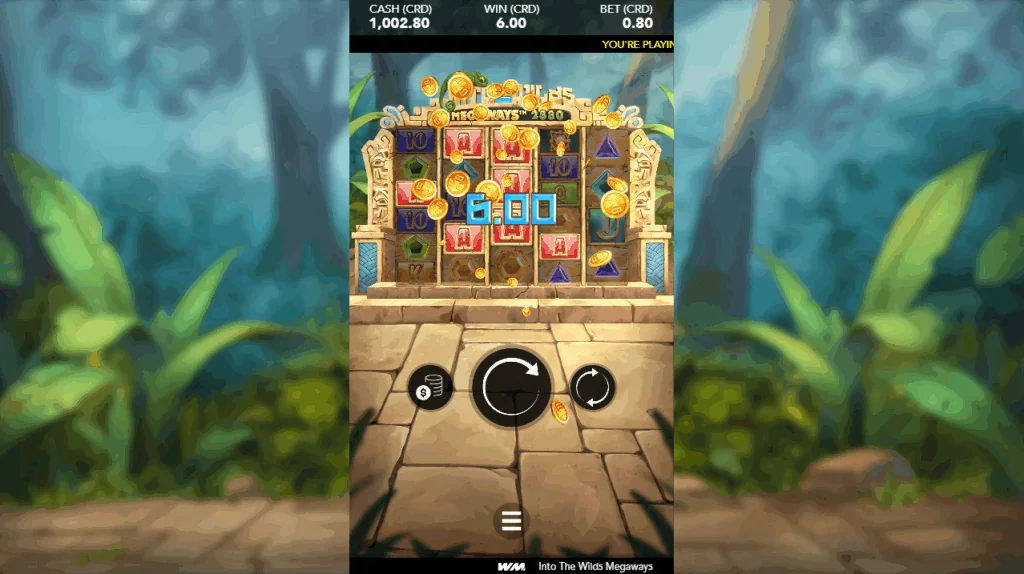
Into the Wild Megaways does not feature a progressive jackpot. The 25,000x maximum win is a fixed theoretical ceiling, achievable through the multiplier trail and cascade interaction during free spins. There is no jackpot trigger, jackpot symbol, or external prize pool connected to this title.
For players specifically seeking a networked or standalone jackpot structure, this slot does not provide one. The win potential is substantial relative to most non-jackpot slots, but it is variance-based and math-model-driven rather than tied to an accumulating prize mechanism.
Mobile Device Compatibility
Into the Wild Megaways was built on HTML5, which means it runs natively in mobile browsers without a dedicated application download. Performance on mid-range Android devices (tested on Chrome, Android 11) holds at a stable frame rate during base game spins. The cascade animations – which involve multiple simultaneous symbol movements – do not produce visible lag on devices from the last four years.
On iOS, Safari rendering is consistent with the desktop version. The touch targets for the spin button, bet controls, and paytable access are sized appropriately for fingertip interaction – an area where some Megaways ports reduce element size to fit the reel grid, at the cost of usability.
The demo version maintains full feature functionality on mobile, including the free spins trigger and multiplier trail – which is worth confirming because some operators restrict demo bonus rounds on mobile. The Megaways counter remains visible in portrait mode without cropping, positioned above the reel grid where it doesn’t compete with the control panel layout.
Advantages and Disadvantages
Advantages
The multiplier trail mechanic that holds position during non-winning free spins is a structural advantage over standard Megaways implementations. It means a bonus round that opens slowly does not automatically become low-value – the multiplier state is preserved, and a late cascade chain at a built-up multiplier can recover the session independently.
The 25,000x max win ceiling is high for a non-jackpot slot in this bet range. For a maximum bet of £10, the theoretical peak return is £250,000 – a ceiling that sits above the majority of comparable Megaways titles from the same period.
The reaction mechanic combined with up to 117,649 ways creates a win-calculation environment where a single free spin can produce four or five consecutive cascades, each evaluated at an advancing multiplier. This multi-layer interaction is the source of the game’s genuine upside potential.
Blueprint’s sound design in this title demonstrates restraint that not all developers apply – the audio environment supports long sessions without the fatigue that high-stimulation soundtracks create in extended play.
Limitations
While the 96.09% RTP is solid and near the industry standard, the base game is deliberately low-yielding: most of the return is routed through the free spins round. Players who prefer steady base-game returns over bonus-dependent payouts may find the standard spin cycle unrewarding between triggers.
The maximum bet cap at £10 per spin restricts this title for high-stake players. Slots in the same Megaways category from competing developers allow £20 to £40 per spin, which compounds the restricted ceiling when targeting the maximum win figure.
Base-game variance is front-loaded toward the free spins phase in a way that makes extended base-game sessions statistically dry. Players who engage the demo to assess rhythm and frequency will encounter long stretches without triggering the bonus – that is by design, but it represents a patience requirement that not all players will find engaging.
The scatter trigger frequency is lower than the Megaways segment average, meaning bankroll requirements for reaching the free spins round with regularity are higher than comparable titles. For demo play, this is acceptable. For real-money sessions with a limited budget, it introduces meaningful risk of exhausting a session before the bonus activates.
Conclusion
Into the Wild Megaways delivers a coherent, well-executed medium-high volatility structure built around a multiplier trail mechanic that performs differently from standard Megaways free spins implementations. The preserved multiplier state during non-winning bonus spins is a genuine mechanical distinction – not a cosmetic variation – and it meaningfully affects the distribution of bonus-round outcomes compared to reset-based systems.
The 96.09% RTP and £10 maximum bet cap are real constraints. They do not disqualify the title, but they are relevant data points for players comparing it against peers in the same volatility tier. The free play version removes those financial variables entirely, making it the most practical entry point for evaluating whether the bonus mechanic and session pace match a player’s preferences before committing real funds.
Blueprint has produced a slot that earns its medium-high volatility classification honestly – not by suppressing all returns indefinitely, but by concentrating meaningful return potential into a bonus structure with genuine depth. Whether that tradeoff suits any given player depends on bankroll, session-length expectations, and tolerance for infrequent but amplified outcomes.